


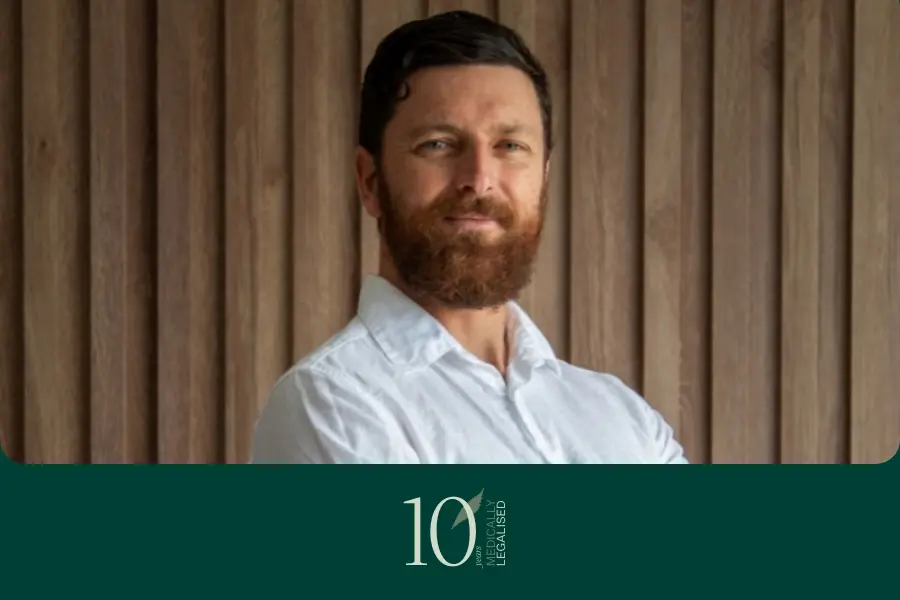
2026 marks ten years since medicinal cannabis was legalised in Australia. To reflect on how far the industry has come, and where it’s headed next, we’re speaking with the people helping shape it. From early advocates, to scientific leaders working behind the scenes, this series captures the journeys, lessons, and hopes defining the first, and the next, decade of medicinal cannabis.
About Chad Walkaden
Chad Walkaden is the CEO and Founder of OnTracka, an Australian digital health company delivering compliant infrastructure for remote patient monitoring and real-world evidence generation across highly regulated therapeutic areas, including supporting international randomised clinical trials alongside TGA-aligned research programs in Australia.
Chad has also led academic collaborations focused on translating structured real-world data into evidence that clinicians and regulators can rely on, including research in PTSD and psychedelic-assisted therapies, as well as the first structured dataset examining natural medicine use within Aboriginal and Torres Strait Islander communities.
A Stage IV cancer survivor, Chad brings lived experience to his work, alongside a career focused on building evidence-led systems that clinicians, researchers, and regulators can trust.
The Australian medicinal cannabis community is ten years young. How did you first find your way into this space?
In 2014, my journey in the medicinal cannabis community started when I was diagnosed with Terminal Stage IV Cancer. Surprisingly, my earliest introduction to the community was one of hesitancy and caution. Legalities aside, my belief systems were informed by a strong sense of criticism about the paranoia or cognitive deficits that may result from consuming cannabis. Consequently, I went through over a year of daily chemotherapy without any medicinal cannabis added into my life.
One day in 2015, the cancer returned more aggressively and spread to other parts of my body.On this day, at the very moment of walking out of the consulting room, a clear, memorable, and conscious thought passed through my mind. Those words were “why not try it”.
Four years on, in 2019, OnTracka was founded in response to a series of observations made over more than five years while working closely across healthcare, research, and emerging treatment pathways.
During that time, it became clear that laws governing medicinal cannabis were shifting globally and domestically, creating new legal access pathways for patients. Jurisdictions such as California were often cited as early examples of this change. However, what stood out was that much of the momentum behind these reforms was driven by anecdotal accounts rather than structured clinical evidence.
This raised a fundamental question: how can clinicians responsibly engage with an emerging treatment area without access to consistent, real-world data that supports clinical decision-making? If prescribing is to sit within mainstream healthcare, it must be supported by evidence, transparency, and systems that clinicians can trust.
That question ultimately led to the creation of OnTracka.
From the beginning, the focus at OnTracka was not on promotion or advocacy. But, on building infrastructure that could support high-quality research and structured real-world evidence generation. We believed that medicinal cannabis could play a meaningful role in the future of healthcare, but only if it was supported by data rather than stories alone.
What is the most meaningful lesson the cannabis plant has taught you?
The biggest learning has been patience. The plant was patient with me, and I’m patient with healthcare.
Healthcare does not change quickly, and neither do clinical behaviours or regulatory frameworks. We are living through a broader shift in how evidence is generated, how patients engage with care, and how emerging therapies are evaluated. Recognising this has reinforced the importance of long-term thinking, measured progress, and resisting the temptation to rush outcomes before the foundations are in place.
What three words capture your hopes for cannabis in Australia over the next ten years?
First-line treatment.
If you want a reliable, anonymous way to self-monitor progress, symptoms, wearable data, and dosing sessions, download the OnTracka app to stay across your medicines, mental health, and more.
The views, opinions, and statements expressed in this article are solely those of the individual contributor and do not represent, and should not be attributed to, Astrid. Astrid makes no claims. Contributors are not our patients – their experiences are shared with the sole intent to inform their inspiration behind driving change in the sector through their advocacy, research, or policy contributions.