


It’s a common enough experience to have become a kind of cliché: you go somewhere new, and within days you feel like a different person. It’s easy to file the feeling under “holiday brain”. No work, no inbox; of course you feel good. But it doesn’t quite explain it, because plenty of holidays leave you just as wired as you arrived. And people who actually move abroad, who keep their jobs and their stress and their tax returns, often describe the same change. Which means it’s something about the place itself that seems to be doing it.
Then, there’s the slightly alien feeling of coming home. It’s not jetlag, and it’s not just the sadness of a holiday ending. It’s the feeling of having been returned to a body you’d forgotten you were renting out. On holiday, sleep just… happened. Lunch was eaten and enjoyed sitting down. A whole book was read. And none of it took effort, which is the part that’s hard to get over, because at home all of those things require planning and discipline, and often fail anyway.
Your nervous system is constantly scanning your surroundings for cues of safety or threat, well below the level of conscious thought. Stephen Porges, the psychologist behind Polyvagal Theory, calls this neuroception. It’s why you can walk into a room and feel uneasy before anything has happened, and why certain homes feel calm the moment you step inside. Your body is reading the pace of the people around you; the noise, the way strangers do or don’t acknowledge you, whether anyone seems to be in a hurry. Then it sets your internal weather to match.
The vagus nerve, the longest cranial nerve in the body, runs from the brainstem down through the chest and gut. It plays a major role in the parasympathetic nervous system, which is involved in rest, digestion, heart rate and social connection. When your surroundings feel safe, your system is more likely to settle. When they feel threatening, it can tip you towards that braced, fast, slightly wired feeling most of us know far too well.
The detail that tends to stop people short is the direction of traffic. Most of the signalling on the vagus nerve runs from the body up to the brain, not the other way around, which helps explain why you can’t simply think your way calm. The body is constantly sending information upstairs, and the thoughts often arrive afterwards to explain the verdict.
Which means a country isn’t just a backdrop you have experiences in front of. It’s an enormous, continuous set of signals your body is taking in all day, every day. Change the signals and the body responds, whether you asked it to or not.
Portugal is a good example, because the signal there is mostly about time. Mornings in Lisbon begin with a small coffee and no visible urgency. And the coffee is small on purpose, because it was never meant to be “fuel” for anything. Anyone arriving from a faster city tends to find this pace almost stressful at first. You keep waiting for everyone to start rushing, wondering how an entire city can lack a sense of urgency. Eventually, you’ll notice your own speed has slowed to match. Pace turns out to be something you adopt from the people around you, like an accent. Most of us assume the speed we live at is a personality trait, but Portugal makes a case that it’s mostly an environment.

In South Korea, the signal is about company. There’s a Korean word, jeong, that gets translated as “affection” or “attachment”, but really means something closer to the bond that accumulates between people who share life over time. You can see it in how eating works. Food arrives for the table, not the person, and eating alone is treated as slightly sad rather than efficient. You also see it in the jjimjilbang, the bathhouses where whole families and total strangers soak and sweat and fall asleep on heated floors in the same big rooms. The first visit is confronting for most Westerners. Keep returning, and you start to wonder why being warm and half asleep near other humans ever stopped being a normal thing to do.

The research backs up what this feels like. Humans regulate through each other, and the steady presence of other people is one of the strongest safety cues a body can receive. But you don’t need a study to know the difference between a week of solo dinners over a laptop, and a week of long, loud shared tables. Only one of them leaves you tired in a way that sleep doesn’t fix.
Peru offers a different signal again. In the Sacred Valley the land isn’t scenery, it’s a participant. People make offerings to Pachamama, the living earth. The mountains have names, the harvest gets thanked. You don’t have to share the cosmology to feel the effect of living inside it for a while, because the practical result is that your days happen in actual relationship with the natural world rather than glancing at it through a window. And at three and a half thousand metres, you breathe slowly because you have no choice. Nobody up there is optimising their breathwork. The place simply doesn’t offer the option of rushing, and after a week or so your body stops demanding it.
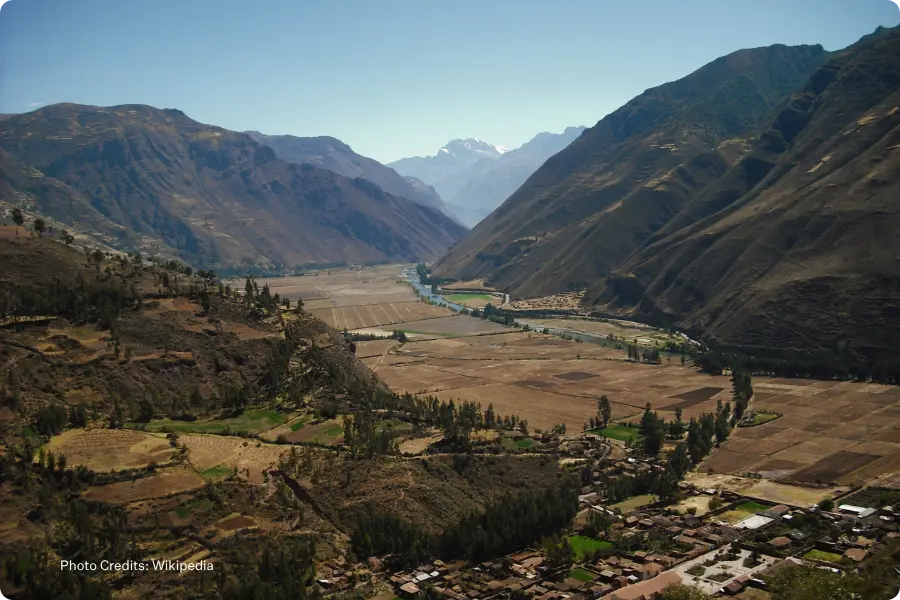
The effect of nature on the stress system has been measured directly. One University of Michigan study tracked people’s saliva over eight weeks and found that twenty to thirty minutes spent somewhere with a sense of nature produced a significant drop in cortisol, the body’s main stress hormone. Larger reviews have linked time in green space to lower heart rate and blood pressure compared with built, screen-lit environments. Nature often gets spoken about as a supplement; something to take in measured doses on the weekend. Somewhere like the Sacred Valley reverses that framing. The relationship with the living world is the default setting, and it’s the indoor, screen-facing, climate-controlled life that turns out to be the unusual intervention.
So can a country change your nervous system? The answer is yes, but not in the way the question implies. There’s no magic in the soil. What changes you is the daily arrangement of things: how fast everyone moves, how often you eat with other people, how much of your day touches the natural world, whether rest is treated as a right or a reward. A different country is just a very effective way of changing all of those at once, which is why the shift feels so dramatic when you travel.
Of course, the slightly uncomfortable flip side of this is that your nervous system is also being shaped by an environment right now. It may be worth asking yourself what your days are signalling to your body, and whether you’d choose those signals if you could see them laid out clearly.
Because some of them, it turns out, you can choose. A slow coffee. A shared meal. A walk without a destination or a podcast. They’re smaller doses of the same medicine, and your nervous system will still take notice.